How to Choose the Best Asset Tag for Your Business
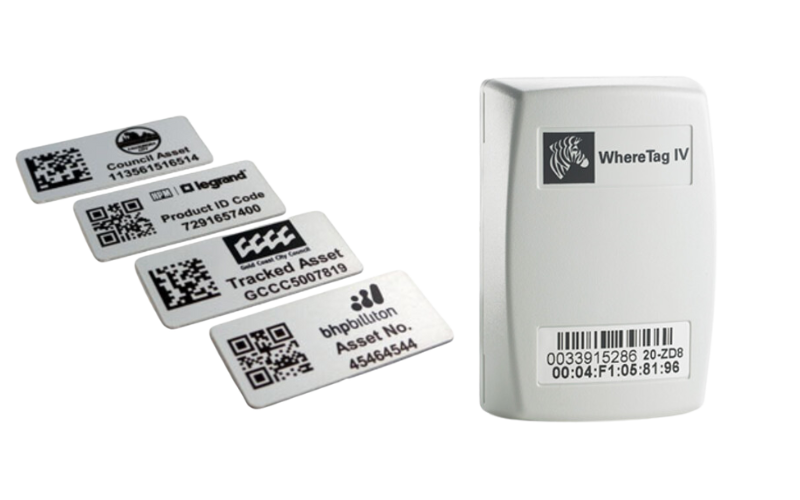
Choosing the right asset tag (also known as asset labels) is a critical element of your asset tracking and management process. One of the first things Assettrac consultants do is to sit down with our clients to fully understand what they have done in the past, what they will be tracking and in what environments. They are able to advise on not only the best asset tags for their operation (and their budget) but also the hardware needed to make sure their tracking is effective.
This article is designed to help you gain an understanding of asset tags and their uses to help you plan an effective asset tracking process.
The 4 Most Common Types of Asset Tag
The four most common asset tags are Barcode, QR code, RFID and NFC and each will be used with a generic handheld device (phone or tablet) or with a scanner for identification and tagging. as well as tracking and auditing.
1. Barcode Asset Tags
Barcodes are obviously widely used and recognisable, even on your weekly grocery shop. They are easily scannable, making them a popular choice for asset tracking. They store information in a series of lines, which, when scanned, provide details about the asset.
Best for: most types of assets
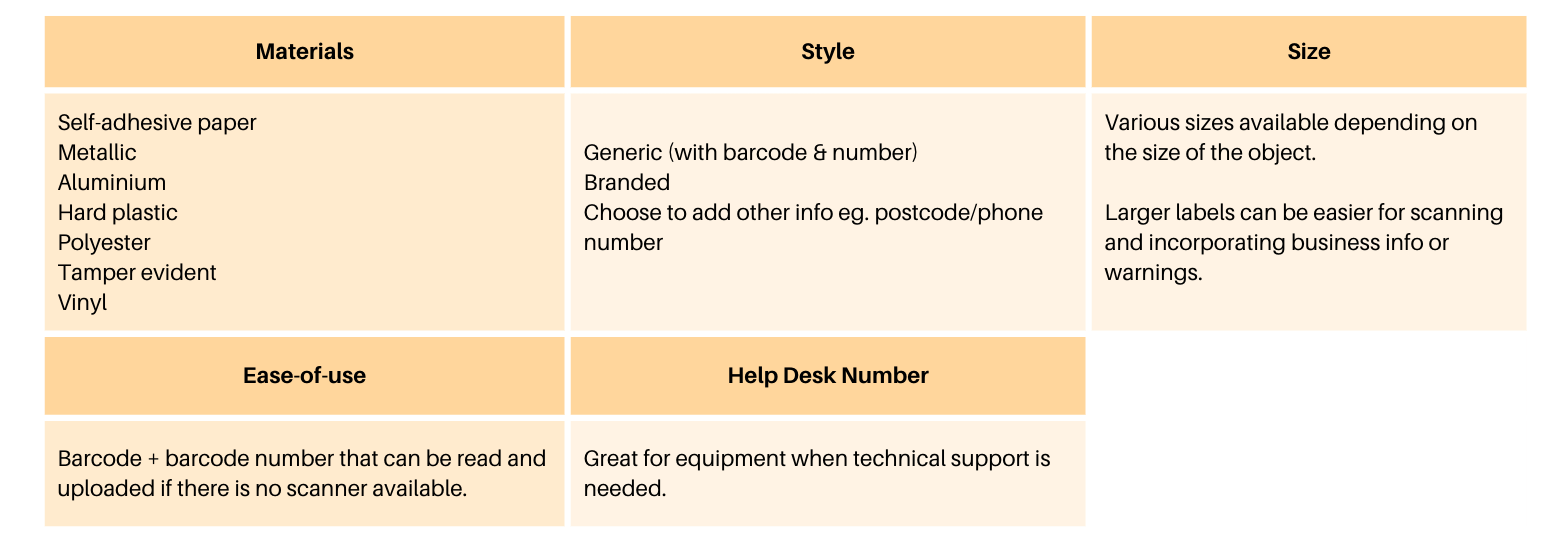
Strengths: available in many formats, generic to branded and in different sizes.
Weaknesses: not as durable over time depending on the material used, not the best solution for extreme temperatures or environments, lack additional security options, may not be picked up by some phones or tablets in low-light conditions.
2. QR Code Asset Tags
 QR codes (or quick response codes) can store more information than barcodes, are more robust and can be scanned using a smartphone or a dedicated scanner. These tags are particularly useful for ease of use for different devices as well as managing more detailed asset information, such as maintenance schedules, manuals, and even interactive guides. They can also easily be customised in terms of size, shape, branding and additional information like contact numbers.
Best for: most kinds of assets
Strengths: store more information and are more versatile than barcodes, they can be scanned from any angle and have higher performance, even when damaged. Can be easily used with a digital device or phone and no need for a specialist scanner, depending on the environment in which its used.
Weaknesses: none
Formats: PVC or plastic and can be customised (size, shape, branding, additional info like phone numbers).
3. RFID Asset Tags
 Radio Frequency Identification (RFID) tags use electromagnetic fields to identify and track assets enabling it to send information wirelessly. The label carries a microchip that has an encoded number. It’s passive, which means it only transmits the data held on it to a device when it is in range of being scanned – by handheld or fixed to identify whatever it is attached to. It therefore doesn’t need a battery to be replaced to be able to be tracked for a particular operation.
They are efficient for real-time tracking and can be read from a distance without a direct line of sight and can be covert. RFID tags are employed in industries where frequent and rapid asset tracking is essential, such as logistics, healthcare, and manufacturing.
Unlike a barcode label, when properly encapsulated, these labels don’t deteriorate with time, improving security and can be ‘read’ through most materials.
Key benefits of RFID tags over-and-above barcodes include:
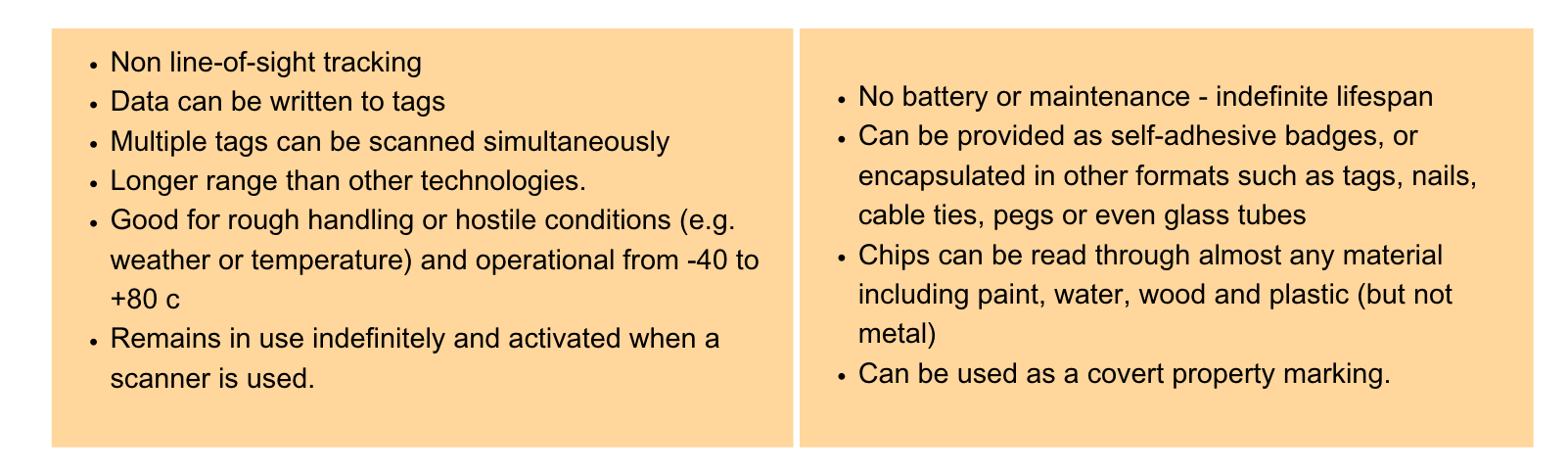
Weaknesses:
RFID still gets transmittance and reading interference when surrounded by water or metal objects. This can provide misreads and less than 100% reporting.
‘On-metal’ tags have gone a long way to mitigate metal issues but unless it’s a no metal environment e.g. retail clothing, we would suggest a ‘pilot’ approach when looking to rolling-out for large operations.
4. NFC Asset Tags
 Near Field Communication (NFC) tags are similar to RFID tags but operate at short ranges and can send data without using a scanner or handheld device camera. They are now commonly used for contactless transactions like Apple and Google Pay, access control, and other close proximity procedures.
NFC asset tags are beneficial for businesses that require this type of tracking and data transfer.
What’s the Best Asset Tag for Different Environments?
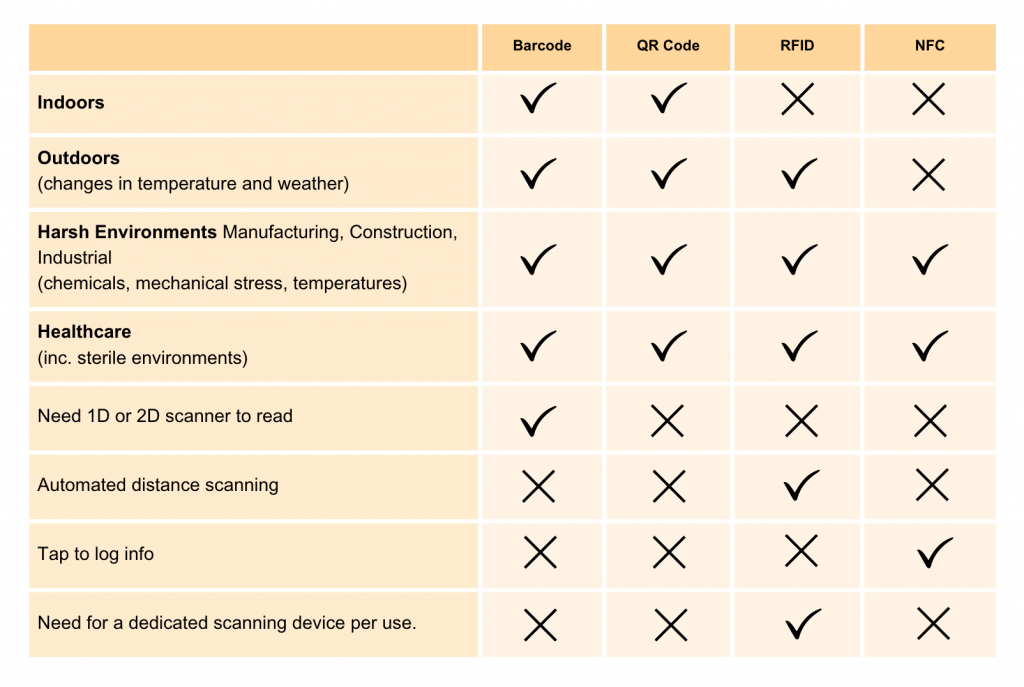
In Summary
The choice of tag for your business will depend on the number of scans, updates, items, its environment and how you want to track your assets (e.g. direct scan as you move or adjust vs. automated zonal tracking).
Barcode/QR are cheap and versatile and can be read by phone, tablet or scanner. RFID in plastic security tags or microchips may seem more expensive but might have a longer lifespan. RFID has automation functionality but also levels of interference depending on the operation and environment.